Loading...
Serving Rock Island, IL and surrounding areas. (309) 791-9490
Your older Rock Island attic has gaps, odd angles, and settled material that rigid batts simply cannot cover. Blown-in insulation fills every corner so your home holds heat all winter and stays cool all summer.
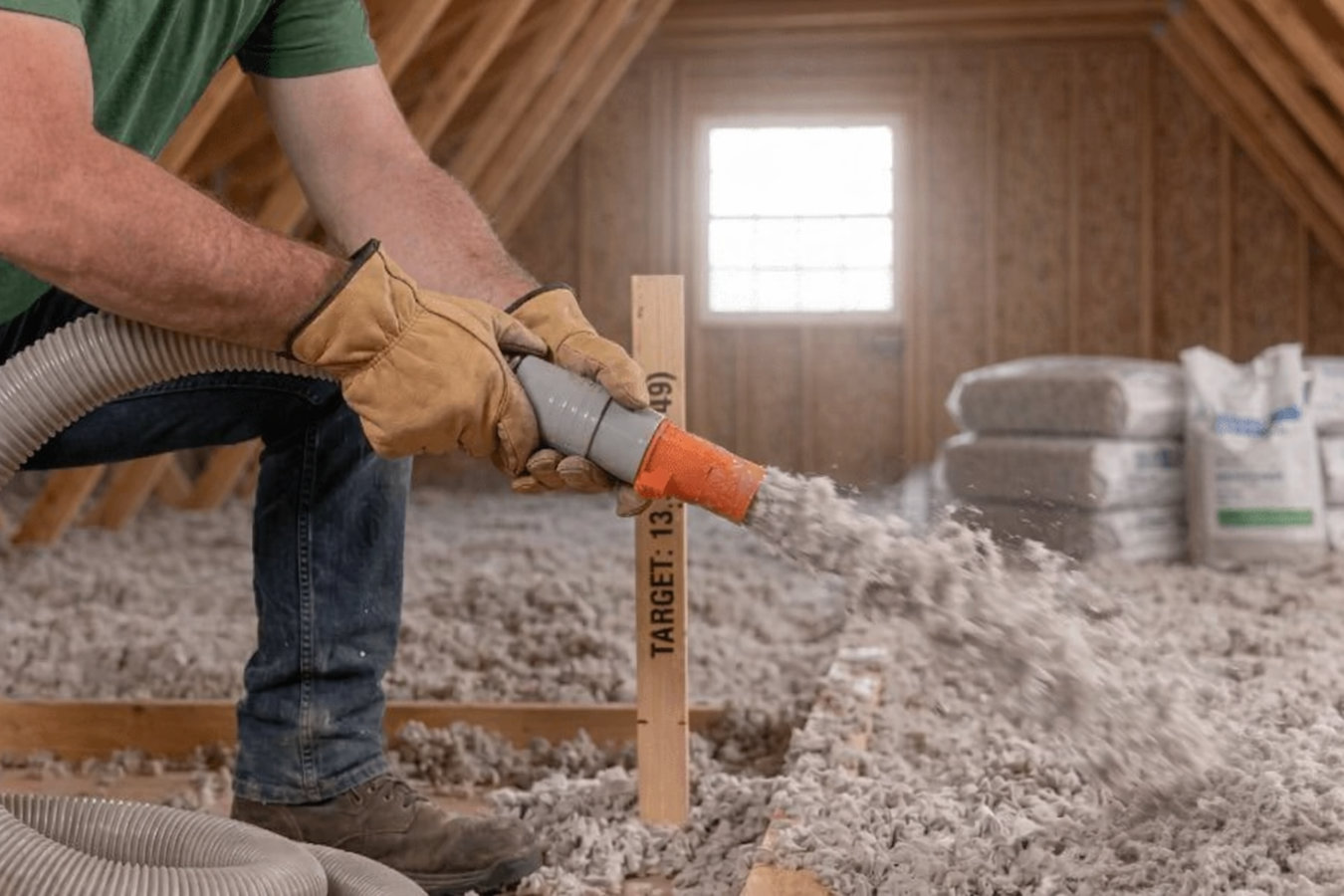
Blown-in insulation in Rock Island fills attics and wall cavities with loose cellulose or fiberglass material using a hose-fed machine, covering irregular spaces and existing joists that batts cannot reach - most attic jobs are finished in a single day.
If you own an older home in Rock Island - and most homes here were built before the 1970s - your attic almost certainly has gaps, settled material, or depth that falls short of what current energy guidelines recommend for this climate zone. That gap between what is up there and what should be up there is costing you money every month from October through April. Blown-in insulation in Rock Island is the most practical way to fix that without any demolition.
Many homeowners pair this service with attic insulation work to address both depth and air sealing at the same time, which tends to produce the most noticeable improvement in comfort and energy bills.
If your furnace runs almost without stopping from October through March and your bills spike sharply, your attic is likely letting heat escape faster than your system can replace it. Rock Island winters are long and cold, and an under-insulated attic is one of the most common reasons older homes here have high heating costs. This is worth investigating before another heating season passes.
If bedrooms at the far end of the house or rooms directly under the roof feel colder than the rest of your home, uneven insulation coverage is a likely cause. In Rock Island's older housing stock, insulation was often installed inconsistently or has settled unevenly over decades. You should not need to pile on extra blankets in one room while another stays comfortable.
Ice dams - ridges of ice that form along the edge of a roof - are a clear sign that warm air is escaping through your attic and melting snow unevenly. Rock Island gets enough winter precipitation and freeze-thaw cycles to make ice dams a real problem, and they can cause water to back up under shingles and into your home. If you have seen this happen, your attic insulation needs attention.
Step into your attic on a summer afternoon in Rock Island and it should feel warm but not unbearable. If it feels extreme, heat is radiating down into your living space and forcing your air conditioner to work much harder than it should. Blown-in insulation acts as a barrier in both directions, keeping summer heat out just as it keeps winter heat in.
Our blown-in insulation work in Rock Island covers attic floors, knee walls, and hard-to-reach spaces where loose-fill material outperforms anything else. For most existing homes, we use cellulose or fiberglass material blown to the depth your climate zone requires. When air leaks are present - around recessed lights, plumbing penetrations, and attic hatches - we seal those before blowing in new material, because adding insulation over unsealed gaps limits how much your energy bills actually improve. If your project also involves walls or a more complete thermal envelope upgrade, we can connect that to a broader home insulation assessment.
Every job starts with a written estimate that breaks down the scope and cost clearly. We do not do phone-only quotes - an in-person look at your attic is the only reliable way to tell you what the job actually requires. We handle permit questions, explain what utility rebates may apply, and leave depth markers in the insulation when we are done so you can verify the coverage yourself.
Best for existing homes where access through the attic hatch is straightforward and insulation depth needs to be raised.
Best for older homes with little or no wall insulation, where material is blown in through small holes without full demo.
Best for homeowners who want the full thermal benefit - air leaks sealed first, then insulation brought to target depth.
Best for homes where some insulation exists but has settled or was installed below current depth recommendations.
Rock Island sits in a climate zone where federal guidelines call for significantly more attic insulation than most homes built before the 1990s actually have. The winters here are long - the heating season stretches from October through April - and the housing stock is old. Many homes in Rock Island neighborhoods were built in the early-to-mid 20th century with little or no attic insulation by today's standards, and decades of settling mean whatever material is up there has likely compressed and lost effectiveness. The combination of harsh winters and old homes is exactly why blown-in insulation sees consistent demand throughout the city. For a reference on recommended insulation levels for this climate, the U.S. Department of Energy publishes R-value guidelines by climate zone.
Rock Island's location along the Mississippi River also brings consistently high summer humidity, and that moisture can work its way into attic spaces over time. We assess your attic ventilation before any installation to make sure the new material will last - moisture is the main enemy of blown-in insulation in this part of Illinois. We serve homeowners across Rock Island and the surrounding area, including Moline and East Moline, where we see the same older housing stock and the same need for proper insulation depth.
Call or submit a request online and we will respond within one business day. We will ask a few quick questions about your home and what is prompting the call so we can show up prepared.
A contractor visits your home, goes up into the attic, and checks existing insulation depth, air leaks, and ventilation. This visit typically takes 30 to 45 minutes and results in a written estimate - not a phone ballpark.
The crew sets up a blowing machine outside or in the garage, runs a hose to the attic, and works methodically across the floor to target depth. Most attics are done in two to four hours. You can stay home.
When the work is done the crew cleans up, removes equipment, and shows you the depth markers left in the insulation so you can confirm coverage. Any permit inspection steps are explained before they leave.
Written estimate, no pressure, no obligation. We respond within one business day.
(309) 791-9490We leave small depth rulers in the insulation when we finish so you can verify coverage yourself - no guessing. It is a standard practice that separates thorough contractors from those who rush.
Adding insulation over unsealed air leaks limits the benefit. We seal gaps around light fixtures, plumbing, and hatches first, which is what makes the difference between a job that moves the needle on your bills and one that barely does.
We work in Rock Island's older neighborhoods regularly - homes with low-pitch attics, unusual layouts, and decades of settled insulation. We know what to look for and how to work around the quirks of pre-1970 construction.
MidAmerican Energy and Ameren Illinois both offer rebates for qualifying insulation work, and some programs require pre-approval. We walk you through the options before you commit so you do not leave money on the table. The North American Insulation Manufacturers Association also sets the installation standards we follow.
These are not talking points - they are the specific practices that determine whether a blown-in job actually improves your home or just adds material to your attic. When you call us, you get a contractor who treats your Rock Island home the way they would treat their own.
A whole-home insulation assessment that covers attics, walls, crawl spaces, and basements for comprehensive comfort and efficiency.
Learn MoreTargeted attic insulation service addressing depth, coverage, and ventilation to protect your home from Rock Island winters.
Learn MoreRock Island winters come early and stay long - lock in your installation date now and feel the difference before the cold sets in.