
Loading...
Serving Rock Island, IL and surrounding areas. (309) 791-9490
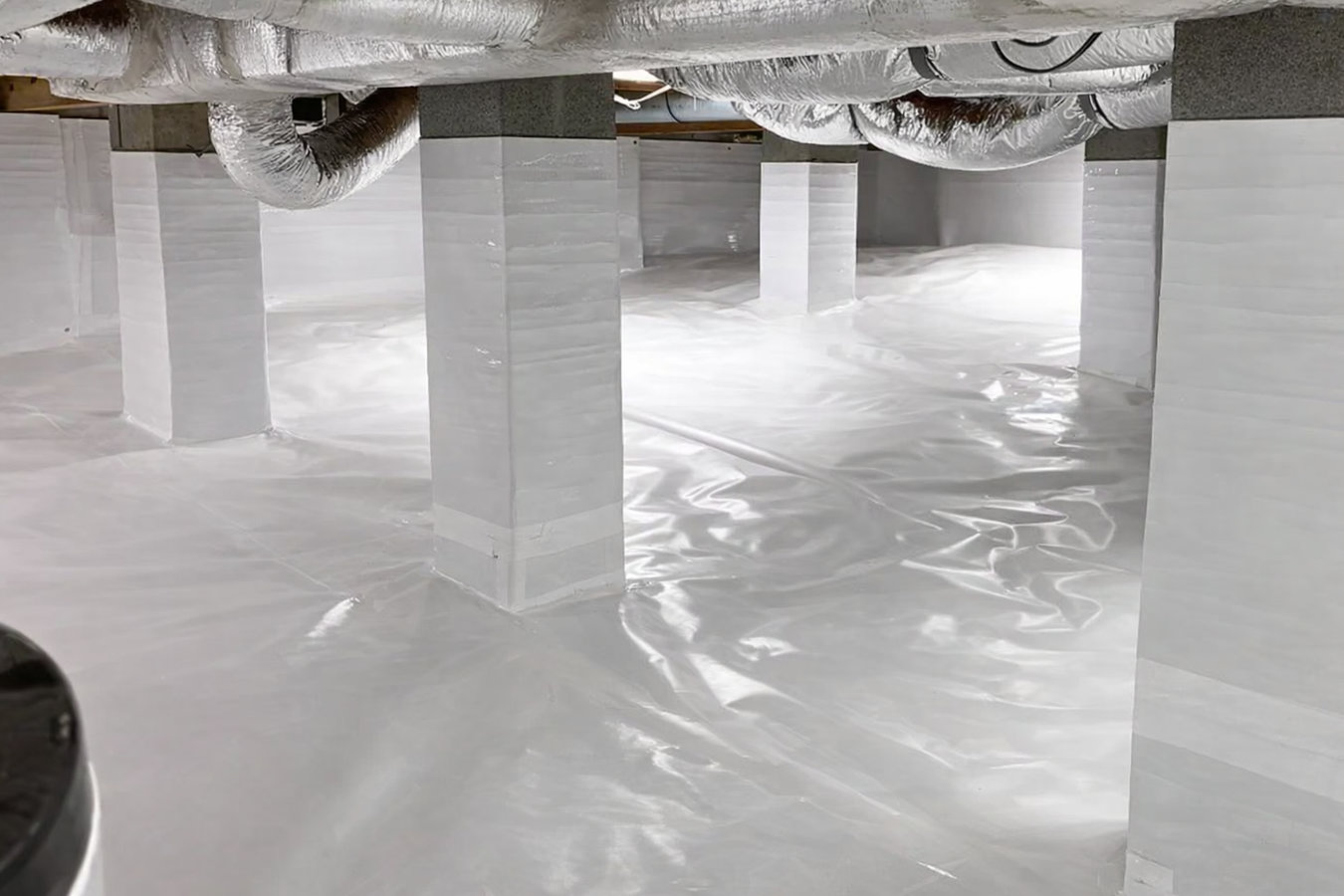
Ground moisture rises through your crawl space every season and quietly damages the wood and insulation holding your home up. A properly installed vapor barrier stops that cycle and keeps your floors, framing, and air quality intact.
Crawl space vapor barrier installation in Rock Island blocks ground moisture from rising into your floors, framing, and living areas - using heavy-duty plastic sheeting laid across the soil and sealed to the foundation walls. Most residential jobs are completed in a single full day.
Rock Island homeowners deal with moisture pressure for much of the year. The humid continental climate brings wet springs and hot, humid summers, and the city sits on or near the Mississippi River floodplain - meaning soil here holds water and drains slowly. If you have noticed musty smells in spring, cold floors in winter, or any soft spots underfoot, the crawl space is likely the source. Many homes in Rock Island were built before the 1970s, when moisture protection in crawl spaces was not a standard part of construction.
A vapor barrier works best when it is part of a complete crawl space approach. We often recommend pairing it with crawl space insulation so that moisture and heat loss are addressed in the same visit - especially for older Rock Island homes where both issues tend to be present at once.
If certain spots on your first floor feel colder than the rest of the room, or if there is a subtle give underfoot near the edges of rooms, moisture may be working on the wood beneath you. In Rock Island's cold winters, unprotected crawl spaces allow damp air to sit directly under your living space. This is one of the earliest signs homeowners notice - and one of the easiest to dismiss until the damage is already done.
A musty or earthy smell that gets stronger after rain or during Rock Island's humid spring months is a classic sign that moisture is building up below your living space. That smell is often mold or mildew growing on damp wood or insulation in the crawl space. It is not just unpleasant - it means the air coming up through your floors is carrying those particles with it into your home.
If you have ever looked into your crawl space and seen puddles, wet soil, or condensation on pipes and beams, your crawl space has a moisture problem that needs attention now. Rock Island's proximity to the Mississippi River means some neighborhoods see ground saturation that does not fully dry out between rain events. Even minor pooling is enough to cause mold growth and wood damage over time.
A damp crawl space makes your heating and cooling system work harder, because moisture in the air takes more energy to condition than dry air. If your bills have been climbing and nothing else has changed, the crawl space is worth investigating. This is especially common in Rock Island homes built before the 1980s, where there is often no insulation or moisture barrier in place at all.
We install heavy-duty polyethylene sheeting - typically 10 to 20 mil thickness - across the full crawl space floor with seams overlapped by at least 12 inches, taped, and secured. The edges run up the foundation walls and are fastened in place, not just draped loosely. A properly installed barrier leaves no exposed soil anywhere. We include a full vapor barrier installation walkthrough after every job so you can see exactly what was done, whether in person or through photos if the space is too tight to access yourself.
For homes where a basic vapor barrier is not enough - typically those near the river in low-lying areas with persistent standing water or unusually high ground moisture - we discuss full crawl space encapsulation, which adds sealed wall panels and sometimes a dehumidifier. We also check for mold and active water intrusion during our initial assessment. The U.S. Environmental Protection Agency identifies crawl space moisture control as a key factor in maintaining healthy indoor air quality, which is why we treat every job as a whole-home issue, not just a crawl space problem.
The right starting point for most Rock Island homes - covers the crawl space floor completely and cuts off ground moisture at the source.
Best for homes near the river or in lower-lying areas where moisture pressure is higher and durability matters more over time.
For homes with persistent moisture problems - adds sealed wall coverage and, where needed, a dehumidifier to actively control the crawl space environment.
We check for active mold, standing water, and damaged materials before any barrier goes in - so the job solves the problem rather than covering it.
Rock Island sits in a humid continental climate zone with hot, humid summers and cold, wet springs. That combination puts crawl spaces under moisture pressure for much of the year - not just during heavy rain, but during the weeks of high humidity that follow. The city also sits directly along the Mississippi River, and much of the city sits on or near the floodplain. Soil in these areas holds more water and drains more slowly than upland soil, meaning moisture is constantly pushing up from the ground beneath homes even when it has not rained recently. Homeowners near the Moline border and throughout the South End tend to see the most persistent crawl space moisture issues because of this floodplain geography.
A significant portion of Rock Island's residential housing was built before the 1970s, when crawl space moisture control was not a standard part of construction. Many of these homes have little or no barrier between the soil and the wood framing above it. Spring snowmelt adds a seasonal surge - when snow melts quickly in early spring, the ground becomes saturated, and that water has to go somewhere. For homes in Coal Valley and other nearby communities we serve, the same soil and climate conditions apply. Scheduling installation in late winter or early spring - before the melt hits - is one of the smartest timing decisions a Rock Island homeowner can make.
We will ask a few basic questions about your home and what you have noticed - no sales script, just information gathering. Most Rock Island jobs can be scheduled within a few days, and we respond to all inquiries within one business day.
Before any price is quoted, we physically go into your crawl space. We check the soil condition, any existing material, mold or pest activity, and how accessible the space is. This is what separates a real estimate from a guess - be cautious of any contractor who quotes without looking.
After the inspection, you get a written quote that breaks down materials, labor, and total cost. We explain why we are recommending what we are recommending. This is a good time to compare quotes and ask any questions before deciding.
The crew brings everything needed and typically completes the job in one full day for a standard-sized crawl space. When the work is done, we walk you through what was installed - in person or with photos - and explain what to watch for going forward.
Free written estimate. Experienced local crew. No obligation to move forward.
(309) 791-9490When your crawl space project needs a permit, we handle the paperwork so the work is on record with the city. You get a crew that knows Rock Island's requirements and does the job right the first time, with a clear record you can point to if you ever sell the home.
We go into every crawl space before we give a price. That means our estimates reflect what your home actually needs - not a generic square-footage calculation. If we find mold, standing water, or old material that needs to come out first, we tell you upfront rather than covering it up.
We have been working in Rock Island and the surrounding Quad Cities area for years. We know the older housing stock, the moisture patterns near the river, and the neighborhoods where crawl space problems are most persistent. That local knowledge shows up in how we approach every job.
Every finished job comes with a walkthrough and photos. The Insulation Contractors Association of America supports documentation standards that let homeowners verify work quality - and that is exactly what we provide. If you ever sell your home, you will have a clear record of what was done and when.
These are not marketing promises - they are the specific things that protect you when hiring any contractor for work you cannot easily inspect yourself. A crawl space vapor barrier is out of sight and easy to cut corners on. We document every job because we want you to be able to verify the work without having to crawl under your house.
Learn what a full vapor barrier installation involves, from material selection to the final walkthrough, and how it fits different home types.
Learn MorePair a vapor barrier with crawl space insulation to address both moisture and heat loss in the same visit - the most complete solution for older Rock Island homes.
Learn MoreRock Island's wet spring season is coming. Get your free estimate now and have your crawl space protected before the ground saturates.