Loading...
Serving Rock Island, IL and surrounding areas. (309) 791-9490
Rock Island Insulation has served Moline, IL homeowners since 2017 with home insulation, spray foam, and air sealing for Craftsman bungalows, Foursquares, and older brick homes throughout the city. We respond within 1 business day.
Rock Island Insulation has served Moline, IL homeowners since 2017 with home insulation, spray foam, and air sealing for Craftsman bungalows, Foursquares, and older brick homes throughout the city. We respond within 1 business day.
Moline's older Craftsman bungalows and American Foursquares were built in an era when wall and ceiling insulation was minimal or absent by today's standards. A comprehensive home insulation assessment identifies every area where your house is losing heat in winter and cool air in summer, then addresses each one in order of impact.
Heat rises, and in Moline's cold winters the attic is where most of it leaves. Many Moline bungalows and Foursquares have pitched rooflines with attic spaces that were never properly insulated, or that were insulated decades ago with materials that have since settled and lost their effectiveness.
Moline homes with brick exteriors or original wood framing underneath vinyl siding have wall cavities that are difficult to access with traditional insulation methods. Spray foam can be injected into rim joists and foundation headers to seal air leaks and add insulation value in areas that other products cannot reach.
Moline's older homes - Craftsman bungalows especially - have decades of gaps around plumbing penetrations, electrical wiring, and framing connections. Air sealing closes those pathways before you add new insulation, which makes the insulation work the way it should.
Moline's clay-heavy soil holds moisture after heavy rain, and that ground moisture can work its way into an unprotected crawl space and affect your floors, framing, and air quality. A vapor barrier stops that moisture at the source before it can cause problems.
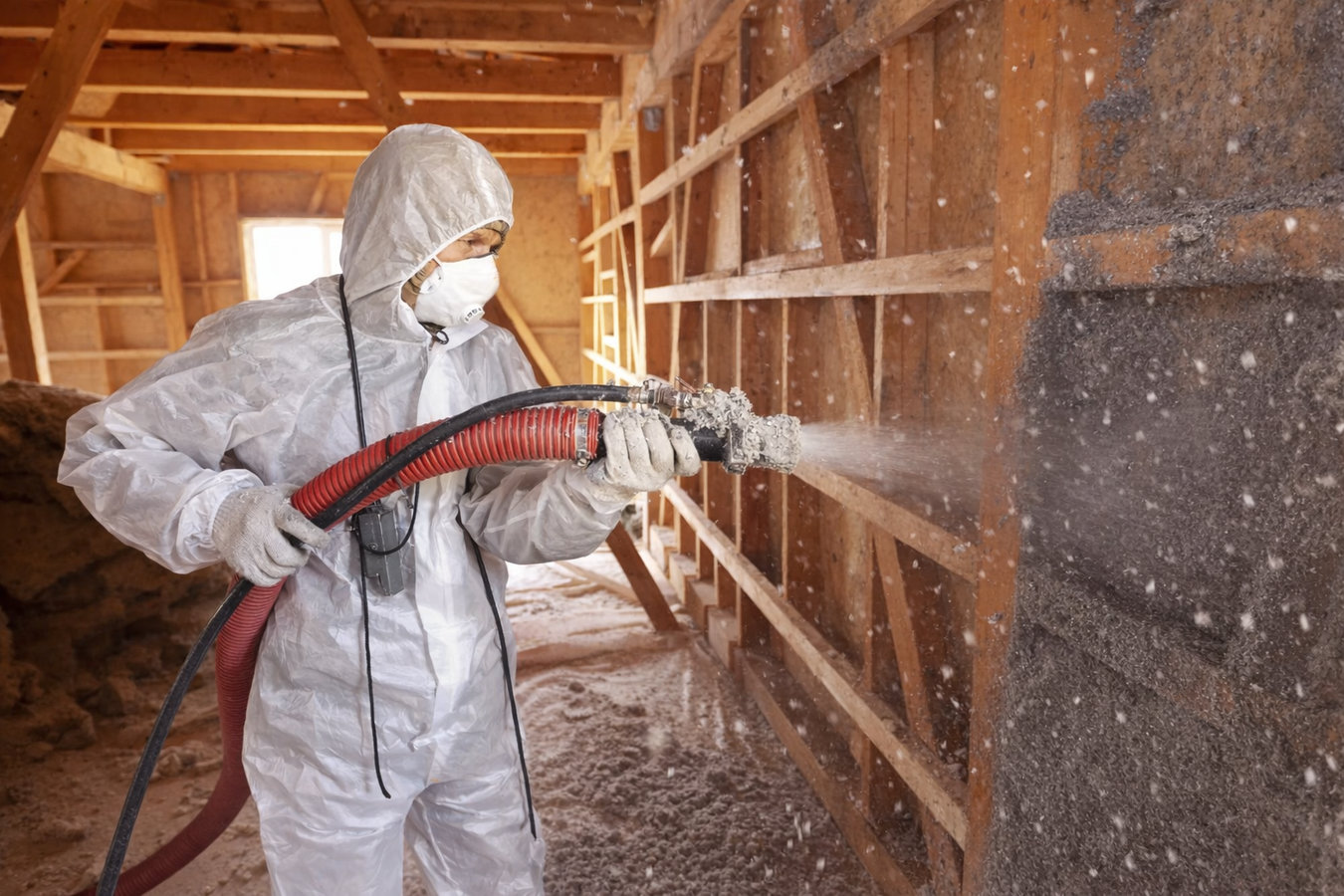
For Moline attics that are accessible but not yet insulated to current standards, blown-in insulation is one of the fastest and most cost-effective upgrades available. It fills irregular spaces and covers existing material evenly, and installation typically takes only a few hours.
Moline sits in IECC climate zone 5, which means design temperatures below -4 degrees Fahrenheit and heating seasons that stretch from October into April. Most of the city's housing stock was built before 1960, when energy conservation was not the priority it is today. The Craftsman bungalows and American Foursquares that line Moline's residential streets were designed for the materials and construction practices of their era - not for the energy costs that homeowners face now. Walls built with minimal insulation, no continuous air barriers, and single-pane windows lose heat constantly in a Moline winter, and every dollar that escapes through the building envelope is a dollar your furnace had to generate.
The city also sits on clay-heavy glacial soil that does not drain quickly after rain or snowmelt. Moisture that pools around Moline foundations creates steady pressure on basement walls and crawl spaces, and that moisture problem gets worse when a home has inadequate vapor control below grade. Choosing the right insulation strategy for a Moline home means understanding both the thermal challenge of a hard-freeze climate and the moisture challenge of poorly draining soil - and making sure those two problems are solved together rather than in ways that create new ones.
Our crew works throughout Moline regularly, and we understand the local conditions that affect insulation work here. We are familiar with the narrow city lots in the older neighborhoods - 40 to 60 feet wide - where homes sit close together and accessing the sides and rear of the house takes planning. The South Hill neighborhoods have some of Moline's largest and oldest homes, many of them brick, and they come with specific challenges: thicker walls, different framing details, and original construction that does not always match what the blueprints would suggest.
Moline is home to John Deere's global headquarters, and the city has a strong core of working and middle-class homeowners who have lived on the same streets for years. The John Deere Pavilion near the riverfront is a landmark most people in town know well. Riverside Drive runs along the Mississippi and marks the lower edge of the city, where the terrain drops from the bluff neighborhoods down toward the water. Whether your home is up on the South Hill or closer to downtown near Vibrant Arena, we have worked on houses like yours throughout Moline.
We serve East Moline to the north and our home base of Rock Island to the west, and homeowners in both cities deal with the same older housing conditions that Moline residents face.
Call or fill out our contact form and tell us what you are experiencing - cold rooms, high bills, damp crawl space, or something else. We respond within 1 business day and can usually get to your Moline home within a week or two.
We walk through the areas you are concerned about, take measurements, check existing insulation depth and condition, and look for signs of moisture. This visit is free, and you do not need to be home for every part of it - just the initial walkthrough.
You receive a written estimate that breaks down cost by area. We also flag any Ameren Illinois rebate programs that may apply to your project - those can offset a meaningful portion of the cost, especially for attic and air sealing work.
Most Moline jobs are complete in a single day. The crew cleans up after themselves and walks through the finished work with you before leaving. If anything comes up during installation that changes the scope, we tell you before we proceed - not after.
We have served Moline since 2017 with written estimates, honest assessments, and no-pressure recommendations. Call or fill out the form and we will be in touch within 1 business day.
(309) 791-9490Moline is a city of roughly 42,000 people in western Illinois, part of the Quad Cities metro area that straddles the Mississippi River. The city is best known as the global headquarters of John Deere, which has been based here since the 1840s and remains the largest employer in the area. Moline's neighborhoods rise steeply from the Mississippi riverfront up to the South Hill, where larger, older brick homes overlook the lower parts of the city. The residential streets in between are lined primarily with Craftsman bungalows and American Foursquare two-stories, most of them built between 1900 and 1950.
The city has a homeownership rate higher than many comparable Midwest cities, and many residents have lived on the same block for decades. That stability means homes are maintained and cared for - but it also means a lot of deferred work on systems that were installed generations ago. The median home value in Moline is well below the national average, which makes cost-effective improvements like insulation upgrades especially appealing for homeowners who want to protect their investment without overspending. We also serve homeowners in neighboring East Moline, which shares many of the same housing characteristics and climate conditions.
Seals air gaps and delivers superior energy efficiency for your home.
Learn MoreHigh-density foam that insulates, strengthens, and blocks moisture.
Learn MoreFlexible, sound-dampening foam ideal for interior walls and attics.
Learn MoreProfessional insulation for offices, warehouses, and commercial buildings.
Learn MoreBlocks ground moisture to protect your crawl space and structure.
Learn MoreControls moisture migration to prevent mold and structural damage.
Learn MoreWritten estimates, no-pressure recommendations, and a crew that knows Moline's older housing stock. We are ready when you are.