
Loading...
Serving Rock Island, IL and surrounding areas. (309) 791-9490
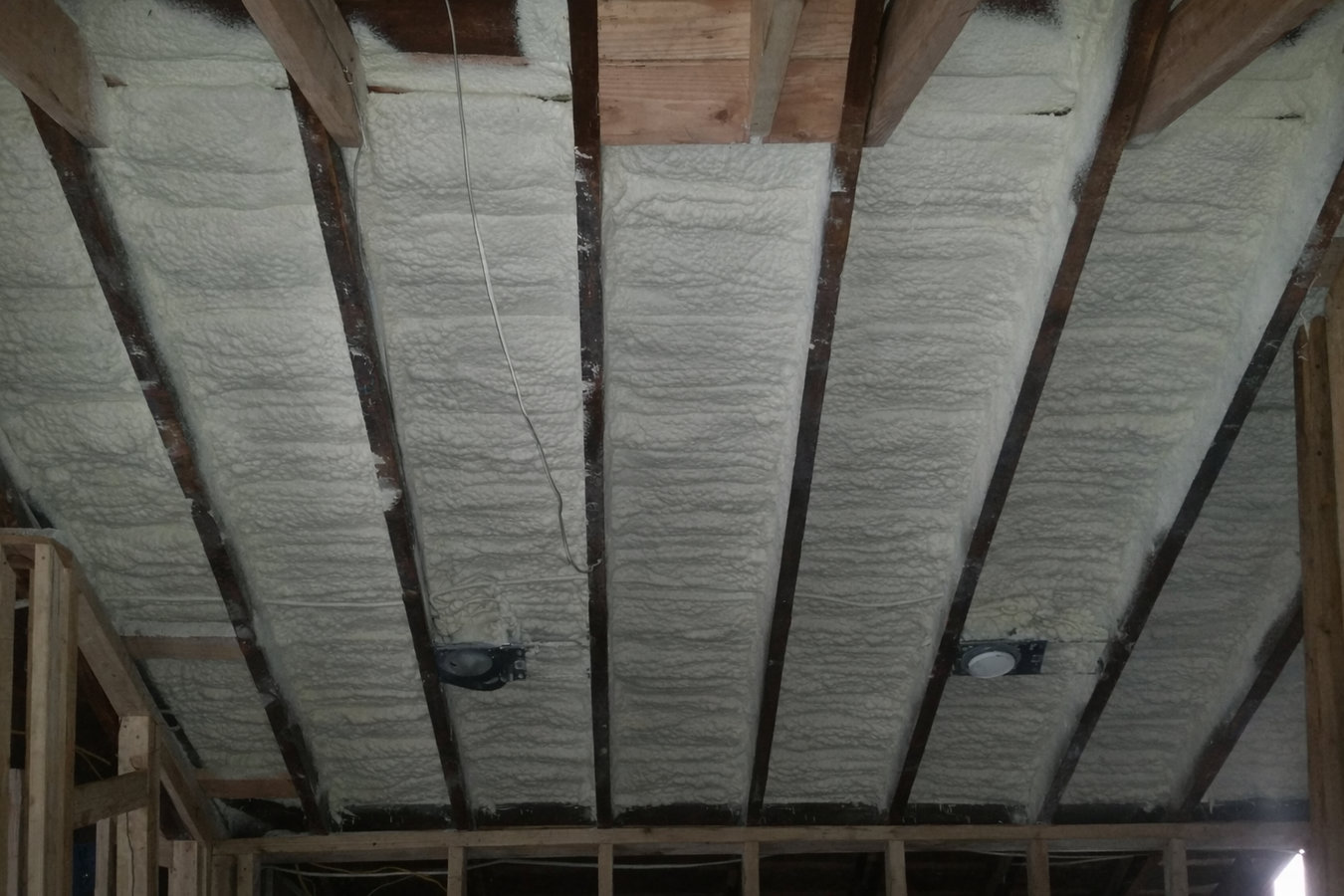
Closed-cell foam does what fiberglass cannot: it fills every gap, hardens in place, and blocks moisture at the same time it insulates - giving older Rock Island homes a building envelope that actually holds up through winter.
Closed-cell foam insulation in Rock Island, IL is sprayed as a liquid that expands and hardens into a dense, rigid layer - it insulates and seals air leaks in a single step, and most residential jobs covering crawl spaces, rim joists, or basement walls are completed in one to two days.
Most insulation materials do one job. Fiberglass batts slow heat transfer but do nothing to stop air movement through gaps. Closed-cell foam does both - it fills the exact shape of the space it is applied to, hardens within seconds, and creates a surface that resists moisture as well as air. For older Rock Island homes where irregular foundation walls and settling have created gaps that fiberglass simply cannot reach, this matters a great deal.
For below-grade spaces, closed-cell foam is typically our first recommendation. For attics and interior walls where moisture is less of a concern, spray foam insulation - including the open-cell variety - may be a better fit for your budget and the specific conditions of that space.
If you feel drafts near the floor on a January day - especially above a crawl space or unheated basement - the rim joist area is almost certainly the source. In older Rock Island homes, that zone is often completely uninsulated or covered with thin, settled fiberglass. Closed-cell foam fills every gap and seals the air leak completely.
Rock Island's proximity to the Mississippi River means crawl spaces here deal with more humidity than most. If you see water stains, smell something musty, or notice condensation on framing in your crawl space, moisture is getting in. Closed-cell foam applied to the walls and floor stops it before the wood framing absorbs enough moisture to rot or grow mold.
If one room is always too cold in winter or too hot in summer regardless of what you do with the thermostat, that room has an air sealing or insulation problem. This is especially common in rooms above garages, over crawl spaces, or at the ends of older homes where the building envelope tends to be weakest.
Most homes in Rock Island's older neighborhoods were built with insulation standards far below what is recommended today, and decades of settling have made things worse. If your home is more than 40 years old and has never had an insulation inspection, targeted closed-cell foam in the right spots can make a dramatic difference in how your home feels and performs.
We apply closed-cell foam in the spaces where it delivers the most return: crawl space walls and floors, basement rim joists, and exterior wall cavities in homes where moisture is a factor. Every job starts with a walk-through to assess existing insulation, measure the space, and check for moisture or structural issues that should be addressed before foam goes in. We also discuss whether open-cell foam insulation is a better fit for other areas of your home - attics and interior walls, for example, where closed-cell is often more than what the application requires.
Installation is fast once it starts. The foam is sprayed on in layers, expands to more than 30 times its original volume, and hardens within seconds. Most jobs are done in a single visit. The Spray Polyurethane Foam Alliance publishes guidelines on proper installation practices - read more at sprayfoam.org. We follow current standards on thickness, coverage, and re-entry timing so every installation is done correctly and safely.
The best application for homes near the river - seals both cold air and moisture from below the living space in a single pass.
The highest-return spot in most older Rock Island homes - the rim joist is where cold air enters most aggressively in winter.
Closed-cell foam handles the irregular surfaces of older brick and stone foundations that fiberglass batts leave gapped and drafty.
For walls where moisture is a concern, closed-cell foam adds a vapor retarder alongside the insulation - no separate membrane needed.
Rock Island sits in a climate zone with average winter lows well below 20 degrees and summer highs above 90 - a wide swing that puts constant pressure on any gaps or weak spots in your home's building envelope. Cold air in January and hot, humid air in July both find their way in through the same places: unsealed rim joists, uninsulated crawl space walls, and gaps around framing penetrations. Closed-cell foam handles both extremes better than most alternatives because it seals and insulates at the same time, which is especially valuable in this part of Illinois. Homeowners in Bettendorf and Silvis face the same climate conditions and benefit from the same approach.
Rock Island also has a large share of homes built before 1970, many of which have never had their insulation updated. Older rim joists - the wood framing where the floor meets the foundation wall - are a particularly common weak point in these homes, and one of the most cost-effective places to apply closed-cell foam. Rock Island's proximity to the Mississippi River means the local air carries more moisture than inland Illinois communities, especially during spring and summer. That humidity finds its way into crawl spaces and basements, and once it reaches unprotected wood framing, it can cause rot and mold over time. The U.S. Environmental Protection Agency provides homeowner guidance on spray polyurethane foam, including what to expect during and after installation.
Reach out by phone or the online form and we respond within 1 business day. We ask a few questions about the areas you want insulated and whether you have noticed specific problems - drafts, moisture, or high bills - so we arrive prepared.
We walk through the area to be insulated, measure the space, and check for moisture or structural issues before recommending foam. You receive a written estimate that explains what will be done, where, and at what cost - with time to compare options before you decide.
Before installation day, clear the work area of stored items and plan to be out of the home during application. Your contractor tells you exactly how long to stay out - typically two to 24 hours depending on the job size. Pets and plants should be out of the area as well.
The crew sprays the foam in layers directly onto the surfaces being treated. The foam hardens within seconds and most jobs finish in a single visit. Before leaving, we walk you through what was done and confirm your re-entry time.
Free estimate, no obligation. We respond within 1 business day and give you a written quote before any work begins.
(309) 791-9490Closed-cell foam applied incorrectly - wrong thickness, uneven coverage, or improper layering - does not perform as expected and can be expensive to fix. Our installers have completed formal product training and follow current installation standards on every job. You should not have to take our word for it - ask us what training our crew has completed.
Rock Island's proximity to the Mississippi River creates humidity conditions that make crawl space moisture a genuine structural concern, not just a comfort issue. We have worked on crawl spaces throughout the Quad Cities and know how to assess water intrusion risk before foam goes in, so the installation protects the structure rather than trapping problems inside.
Ameren Illinois offers rebates for qualifying insulation work, and many Rock Island homeowners are eligible but never collect because the process feels unclear. We walk you through whether your project qualifies, what documentation is needed, and how to capture the rebate before you see a return on your energy savings.
The U.S. EPA sets expectations for safe re-entry after spray foam installation, and we follow them. Before work begins, you receive your specific re-entry time in writing - no guessing, no vague answers. Once the foam has cured, it is inert and there is nothing hazardous to worry about going forward.
Closed-cell foam is one of the most durable insulation investments available for an older home - it does not settle, sag, or need to be replaced. Getting it installed correctly the first time is what makes that durability meaningful, and that is the standard we hold every job to.
Open-cell foam is a softer, more budget-friendly alternative suited for attics and interior walls where moisture resistance is less critical.
Learn MoreLearn about all spray foam options - both open- and closed-cell - and which application makes the most sense for your Rock Island home.
Learn MoreEvery winter you delay is another season your crawl space and rim joists are working against you. Call today or submit a request and we will respond within 1 business day.